Discover the Digital Marketing Trends to Watch in 2026. Learn how artificial intelligence is transforming content creation, advertising, SEO, personalisation, customer service and marketing strategies.
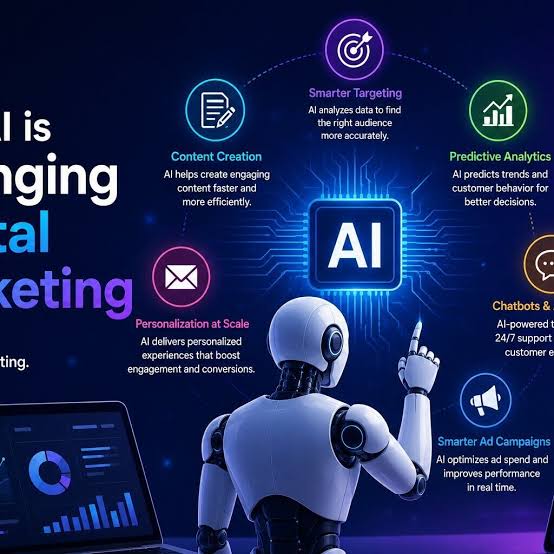
Artificial intelligence is changing the way businesses approach marketing. From creating content and analysing customer behaviour to improving advertising and customer support AI is becoming a part of modern marketing strategies.
The growth of AI is also connected to the Digital Marketing Trends to Watch in 2026 as businesses are looking for smarter and more personalised ways to communicate with their audiences.
Of replacing human creativity AI can help marketers automate repetitive tasks understand data generate ideas and improve marketing performance. However businesses still need creativity, experience and judgement to create authentic marketing.
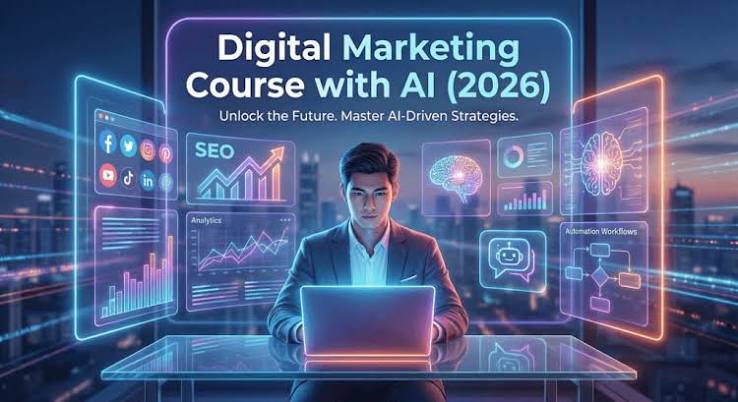
Why AI Is Important in the Digital Marketing Trends to Watch in 2026
Artificial intelligence has become one of the developments in digital marketing. Marketers can use AI tools for activities throughout the customer journey.
Some common applications include:
- Content creation and idea generation
- Customer behaviour analysis
- Audience segmentation
- Advertising optimisation
- Chatbots and customer support
- Personalised recommendations
- Marketing data analysis
- Search and content optimisation
AI allows marketers to spend time on repetitive activities and more time developing creative strategies and understanding their customers.
- 1. AI-Powered Content Creation
Content marketing requires businesses to create useful and relevant content. AI tools can support marketers by generating ideas creating outlines improving existing content and helping with research.
For example a digital marketer can use AI to develop:
- Blog topic ideas
- Social media content ideas
- Email subject lines
- Video concepts
- Ad copy variations
- Content outlines
- asked questions
However AI-generated content should not simply be published without human review. Marketers should check the information add ideas include real experiences and make sure the content is useful to the intended audience.
Human creativity remains important because audiences want content that feels relevant, authentic and trustworthy.
- 2. AI and Search Are Changing SEO
Search behaviour is changing as users increasingly interact with AI-powered search and conversational interfaces. Of entering only short keywords users can ask detailed questions using natural language.
This is creating approaches such as Answer Engine Optimisation (AEO) and Generative Engine Optimisation (GEO).
Businesses can prepare by creating content that clearly answers the questions their audiences are asking.
For example:
- What is digital marketing?
- How does SEO work?
- How can a business improve visibility?
- Which digital marketing strategy is suitable for a business?
- What are the latest Digital Marketing Trends to Watch in 2026?
The focus should be on answers, clear structure, relevance and search intent rather than simply repeating keywords.
- 3. AI-Powered Advertising
Advertising platforms are increasingly using intelligence to help marketers manage campaigns and improve performance.
AI can support advertising activities such as:
- Audience targeting
- Ad variations
- Campaign optimisation
- Budget management
- Performance analysis
- Conversion optimisation
This can reduce the amount of work required from marketers. Of spending all their time adjusting individual campaign settings marketers can focus more on creative concepts, audience strategy, landing pages and conversion improvements.
AI does not remove the need for marketers. It changes where marketers spend their time and attention.
- 4. Personalisation Through AI
Customers receive an amount of marketing communication every day. Generic messages may not always capture their attention.
AI can help businesses create personalised experiences by analysing customer information and identifying patterns.
Businesses can use personalisation in:
- Email marketing
- Product recommendations
- Website experiences
- Advertisements
- Social media content
- Customer support
- Landing pages
For example an e-commerce website may recommend products based on a customers browsing or purchasing behaviour.
The goal of personalisation should be to make the customer experience more relevant than simply sending more marketing messages.
- 5. AI Chatbots and Customer Support
Customer support is another area where AI is becoming increasingly useful. AI-powered chatbots can help businesses answer questions and provide information at different stages of the customer journey.
A chatbot can assist with questions about:
- Products and services
- Pricing information
- Business hours
- Order updates
- asked questions
- Troubleshooting
- Appointment information
This can help businesses provide faster responses while allowing human employees to focus on more complex customer issues.
However businesses should provide a way for customers to reach a human representative when a question requires personal attention or detailed support.
- 6. AI and Data-Driven Marketing
Data is a part of digital marketing. Businesses collect information from websites, social media, email campaigns, advertising platforms, CRM systems, sales and customer interactions.
AI can help marketers analyse amounts of information and identify useful patterns.
For example AI-supported analysis can help marketers understand:
- Which campaigns generate conversions
- Which audiences interact with content
- Which products receive attention
- Which channels bring customers
- Where customers leave the buying journey
of focusing only on likes, views and followers marketers can use data to understand whether their marketing activities are contributing to meaningful business results.
- 7. Human Creativity Still Matters
As AI becomes more common human creativity becomes more important. Businesses should not depend entirely on automated content and marketing systems.
Human marketers provide:
- ideas
- Brand personality
- Industry experience
- Emotional understanding
- Creative storytelling
- thinking
- Customer understanding
AI can generate information and ideas but marketers need to decide what is useful, accurate, relevant and appropriate for their audience.
A strong marketing strategy can combine the speed of AI with creativity and judgement.
How Businesses Can Use AI Effectively in 2026
Businesses do not need to introduce AI into every marketing activity at. They can begin with areas where automation can save time or improve efficiency.
A simple approach is:
- Identify tasks – Find marketing activities that consume a lot of time.
- Choose AI tools – Select tools that solve specific marketing problems.
- Keep review – Check AI-generated information and content before publishing.
- Protect customer data – Use customer information responsibly. Follow applicable privacy requirements.
- Measure performance – Compare results before and after introducing AI.
- Improve continuously – Adjust the strategy based on data and customer feedback.
This approach allows businesses to use AI as a marketing assistant than relying on it for every decision.
The Future of AI and Digital Marketing
AI will continue to influence content creation, search, advertising, personalisation, customer service and data analysis. These developments are closely connected to the wider Digital Marketing Trends to Watch in 2026.
However successful marketing is not about using the newest technology. Businesses still need to understand their customers create content build trust and communicate clearly.
AI can help businesses work faster. Analyse information more efficiently but the quality of the strategy still depends on how businesses use the technology.
Conclusion
Artificial intelligence is becoming a part of modern digital marketing. It can support content creation, SEO, advertising, personalisation, customer service and data analysis.
Understanding the Digital Marketing Trends to Watch in 2026 can help businesses identify where AI can provide value and where human creativity remains essential.
Businesses that use AI responsibly while maintaining human-centred marketing can adapt more effectively to the changing digital environment.